Crafting a Digital Stamp Experience: A Fusion of Art and Interaction
Stamps have long been celebrated as tiny canvases of art that encapsulate history, culture, and moments. The idea behind creating an interactive online stamp collection was to breathe new life into the world of philately, making it accessible to a broader audience while honoring its intricate craft.
The initial concept wasn't about replicating a standard image gallery; it aimed to evoke the essence of a physical stamp album. The interaction design plays a pivotal role in achieving this, allowing users to browse through an eclectic range of stamps, select one for detailed inspection, and communicate their thoughts through a postcard feature.
The Genesis of the Collection
by Marijana Pavlinić
This collection began during the isolation of lockdowns, driven by a quest for personal creative fulfillment. I stumbled upon a family heirloom—a stamp album compiled by my grandfather—which became my source of inspiration. Each stamp I encountered brought forth a myriad of design possibilities, resulting in vector reinterpretations that combined my evolving skills in digital drawing and a fascination with typography.
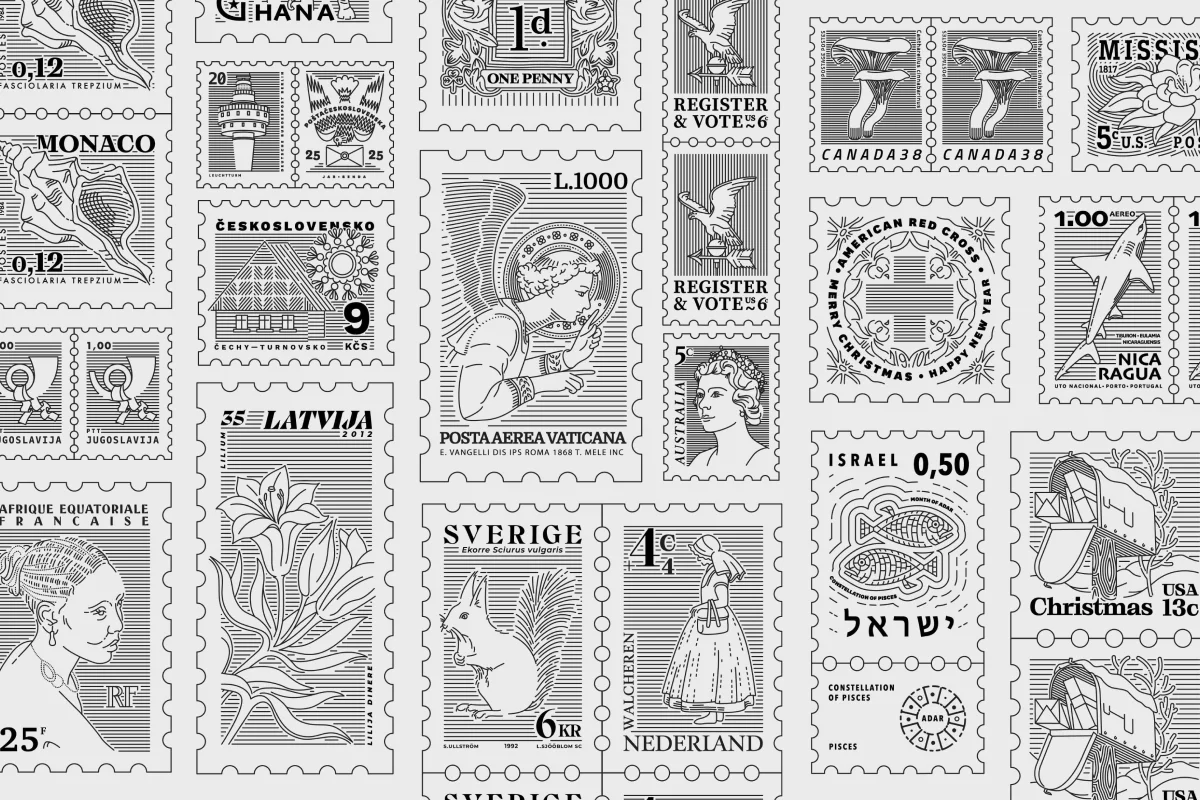
As this artistic endeavor matured, the ambition to transform simple images into a richer experience emerged. Collaborating with my partner helped realize that vision, prompting critical questions about how to maintain the feel of a stamp album throughout the digital interface.
- How to exhibit the relationship between original stamps and their recreations?
- How to highlight key aspects of the original artwork?
- How to evoke an atmosphere that balances archival quality and playful exploration?
These guiding principles became our benchmarks, ensuring that we developed not just another website but a digital homage to stamp collecting.
Core Interactions
The interactions were pivotal to the development process, chiefly the glass loupe feature and the postcard feedback mechanism. By making the entire portfolio an open-source project, we invite others to delve into our technical choices while this overview will focus specifically on our most engaging interactions.
Creating the Loupe
The selection of a stamp triggers the transition to inspection mode, harnessing a loupe that simulates physical interaction. Instead of a simple zoom function, we aimed for an experience reminiscent of holding an actual magnifying tool—complete with edge distortion and a zoom control that feels tangible.
The loupe's functionality lies in its clever construction:
<Loupe>
  <Lens>
    <Canvas>
      <LensScene>
        <ScreenQuad>
          <lensMaterial />
        </ScreenQuad>
      </LensScene>
    </Canvas>
  </Lens>
  <Dial>
    <input type="range" />
    <svg />
  </Dial>
</Loupe>
Reconstructing the Scene
The loupe doesn’t merely enlarge the original image; it creates a focused scene in an offscreen canvas, which includes a larger representation of the stamp with realistic textures. This process not only enhances performance but also contributes to a more detailed zoom experience where even the intricacies of paper grain come to life.
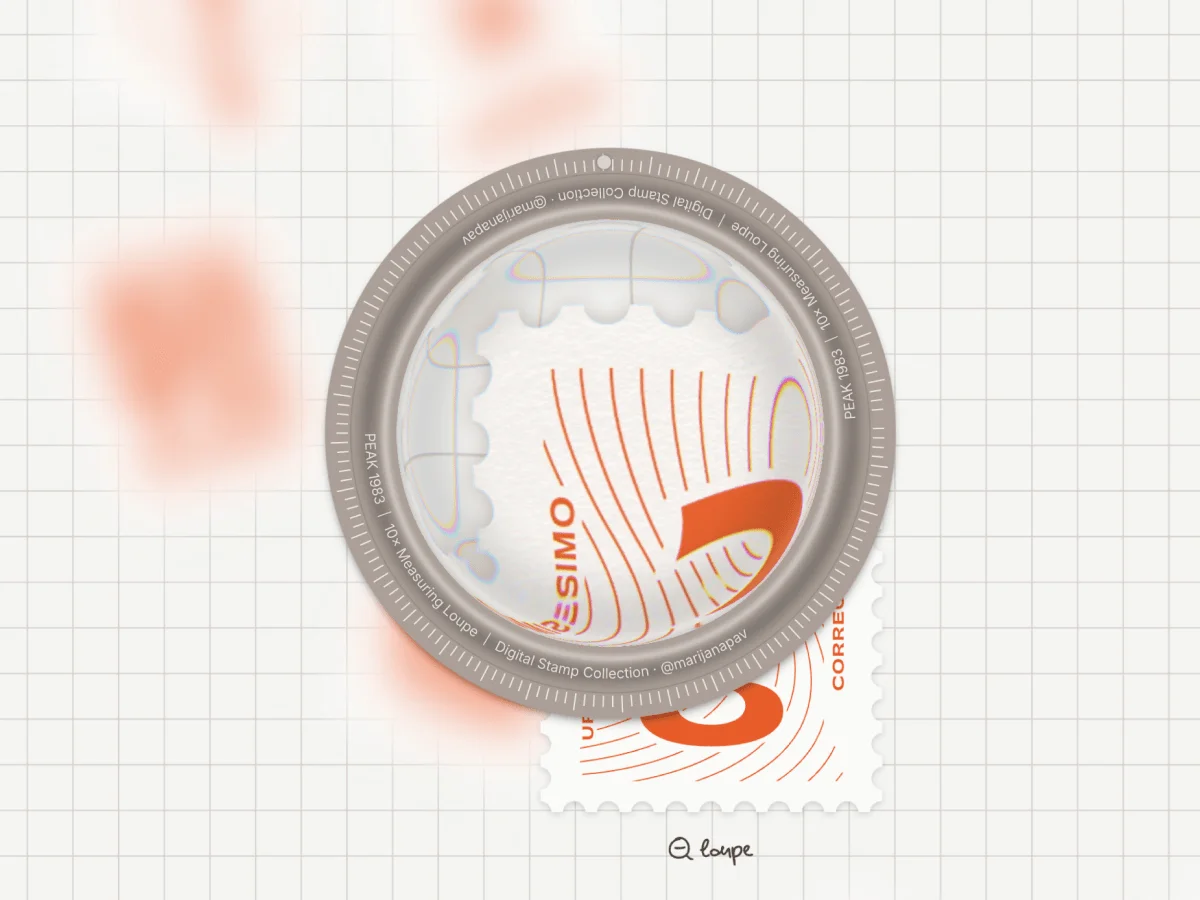
This canvas is transformed into a texture for the lens shader, allowing for a rich visual experience that magnifies more than just the image.
Constructing the Glass Effect
The shader manipulates how the texture appears across the lens, introducing a sense of realism with varying clarity and color shifts that create a believable glass illusion. The focus needed to feel immersive rather than technically accurate.
The loupe's movement is responsive, allowing users to drag it, with keyboard support enhancing accessibility for diverse users.
Postcard Feedback Mechanism
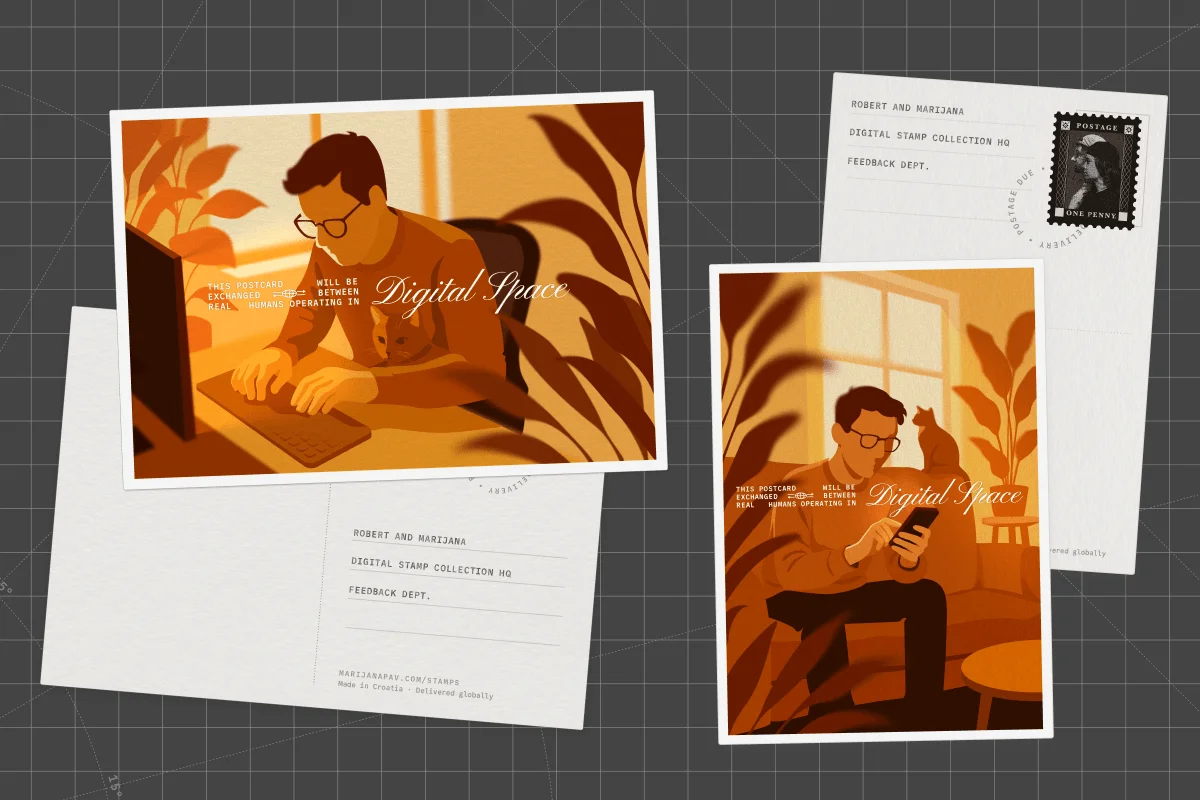
The feedback function took shape as a creative interpretation of traditional correspondence. Users share their thoughts on a postcard that visually resonates with the project's stamp theme.
One side of the postcard displays a custom illustration, while the other is reserved for user feedback, echoing the experience of flipping over an actual postcard.
Building an Engaging Interaction
In this interactive dialog, we crafted engaging animations around the postcard experience, which was built as an accessible component. Prioritizing usability, the dialog supports intuitive keyboard navigation while maintaining a playful visual style.
Attention to Detail
Once the primary interactions were established, we turned our focus to nuanced details that encapsulate the experience of flipping through a real album. Collector references, such as metadata styled like catalog cards and handwritten typography, enhance the authenticity of the virtual environment.
These thoughtful design choices create an immersive experience that feels both painstakingly crafted and genuinely reflective of a collector’s journey.
Conclusion: Connection and Reflection
Receiving feedback through our digital postcard feature has been rewarding, showcasing the power of shared creative experiences. Each message reflects a community engagement that transcends the digital barrier, reminding us of the joys of connection, creativity, and storytelling.
In undertaking this project together, we explored how ease of collaboration and a shared vision can manifest in forms that surprise and delight. The balance between design, interaction, and technology converged beautifully, embodying the essence of both the art and the science behind digital experiences.