SBTI: The Viral Personality Quiz Transforming Emotional Expression on Chinese Social Media
A Playful Personality Quiz
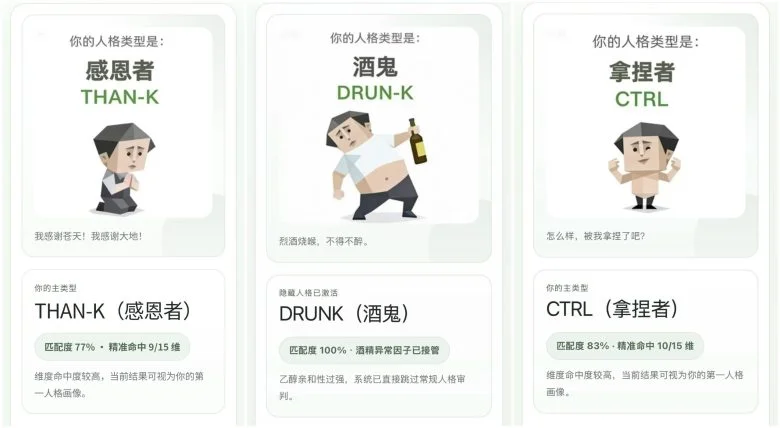
A novel personality quiz named SBTI has surged in popularity across Chinese social media, captivating users with its humorous, meme-style approach. Unlike its predecessor, MBTI, SBTI offers an irreverent twist focused on self-mocking labels. The quiz has gained remarkable traction, with about 40.85 million searches on WeChat Index recorded as of early April. Discussions related to SBTI have surpassed 20 million across various platforms, illustrating a fascination with this amusing take on personality assessment.
Reframing a Familiar Format
The name "SBTI" carries a provocative connotation, derived from the Chinese term shabi, meaning “fool.” This irreverence sets the tone for the quiz, which uses a familiar format where users answer questions to receive a four-letter personality type. Unlike MBTI’s structured classifications, SBTI adopts a playful stance wrapped in internet culture references. It creates labels that resonate more as inside jokes than formal assessments, and this cultural frame means users are more likely to share results that reflect not just who they are, but how they feel today.
This can be seen as a direct response to the wider cultural shift among younger generations that often favor humor and relatability over conventional seriousness. There's something telling about a quiz that invites self-reflection while simultaneously encouraging you to laugh at yourself. The repetitive nature of personality tests has long made them a staple for self-discovery, but the SBTI quiz flips this trope on its head, marrying humor with the quest for identity.
A Snapshot of Emotions
This quiz doesn’t aim to reveal deep psychological insights; instead, it serves more as a playful representation of users' current emotional states. The descriptors, often absurd and humorous, are less about accuracy and more about relatable recognition. Users share their results not as earnest self-assessments but as lighthearted reflections of their present feelings. This playful interaction fosters a sense of community, prompting users to bond over shared humor and collective experiences, which feels more relatable than any textbook psychology.
The quiz's creator, known on Bilibili as “蛆肉儿串儿,” has emphasized that the project was intended purely for entertainment and is not rooted in psychological expertise. Initially inspired by a personal anecdote about encouraging a friend to cut back on drinking, the quiz even introduced a “drunk” persona in its early versions, indicating that the creator found humor in life’s absurdities. This approach resonates, as many participants appreciate the blend of personal introspection and humor.

An Unofficial Cultural Phenomenon
Despite its casual intentions, SBTI has struck a chord with audiences, significantly altering how emotions are conveyed online. It provides a light-hearted avenue for users to express their moods without the pressures often associated with traditional personality tests. In an age where mental health and emotional openness are becoming more integral to dialogues on social media, SBTI offers a creative outlet that balances humor with self-reflection.
By repurposing MBTI's format into a more accessible and comedic framework, SBTI invites users to contribute to an environment rich with irony and levity. The key here isn't about precision or finding your "true self." Rather, it’s about connecting with fellow users over relatable experiences, where exchanging results can spark laughter and camaraderie. If you're working in this space, the quiz highlights how humor can serve as a vehicle for deeper connections, even if those connections are built on irreverent jokes.
Update: This article has been revised to clarify that SBTI operates without a built-in sharing feature, relying instead on users voluntarily sharing their results.
Implications and Future Outlook
The rise of SBTI might signal a broader trend in how personality quizzes evolve to meet modern social needs. There’s a growing appetite for tools that allow people to express themselves more freely and playfully. Traditional personality assessments, while valuable in their own right, can feel restrictive, especially for younger generations eager for authenticity mixed with humor. As we see more quizzes like SBTI gain traction, it opens the door for a possible shift in personality testing from serious assessments to a more collaborative and enjoyable experience.
What this means for you is that these informal quizzes could play a part in how we negotiate our identities in a digital landscape. Given that emotional connectivity is increasingly vital for user engagement, especially among younger audiences, companies might need to start thinking beyond conventional testing methods. The success of such light-hearted approaches could foster an environment where people feel less judged and more encouraged to explore and share their personalities.