Rethinking Streetlights: How Omniflow is Transforming Urban Infrastructure
Transforming Urban Lighting
In the conventional urban environment, streetlights have long been fixtures taken for granted. They serve a singular purpose—illuminating roads during the night—while remaining largely invisible in daylight hours. Yet, Portuguese company Omniflow, led by CEO Pedro Ruão, is challenging this perception by reimagining streetlights as multifaceted hubs for energy, connectivity, and service. This shift symbolizes a broader reevaluation of urban infrastructure as cities worldwide grapple with needs for both sustainability and modernization.
More than Just Illumination
Ruão’s vision stretches far beyond basic lighting. His designs integrate systems that capitalize on both wind and solar energy, dramatically reducing reliance on grid electricity by over 90%. This efficient model transforms street lighting into a renewable energy source. The installation process is designed to be quick and painless, allowing for retrofitting onto existing poles in just about 15 minutes. This modular approach means that cities can upgrade their lighting infrastructure with minimal disruption. Each unit is not merely a light source, but an adaptable solution that offers EV charging capabilities, collects valuable data through sensors, and employs AI-driven video analytics for monitoring urban environments.
Integrated Functionality
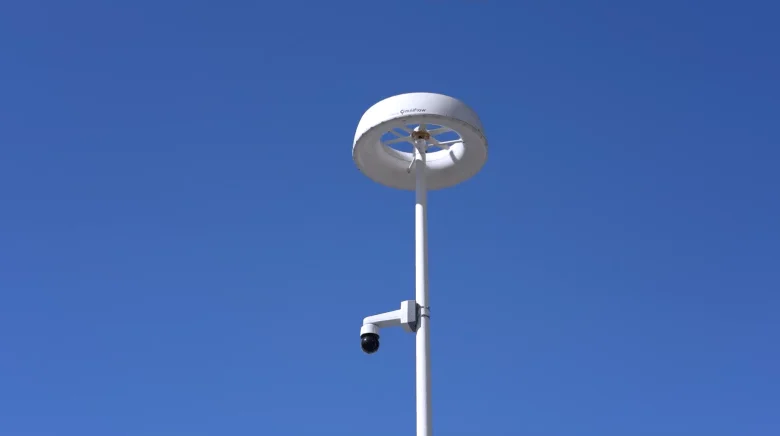
During our visit, we had the opportunity to inspect one of Omniflow's larger models, featuring about 1.2 meters in diameter and tailored for installation on poles ranging from 8 to 10 meters tall. This model goes beyond mere illumination, incorporating EV charging capabilities. It includes a visual status indicator that changes color to show charging availability, which allows users to assess the situation from a distance. This kind of user-centered design is becoming increasingly important as cities embrace electric vehicles. A system that clearly communicates status helps to streamline the urban experience and reduce frustration for EV drivers.
Expanding Use Cases
Omniflow's innovative capabilities don't stop at traditional uses. They've developed a smaller variant that enhances user experience with auditory notifications, such as voice announcements detailing charging status. Imagine a smart bus stop, for instance, equipped with real-time updates that estimate passenger wait times. These integrations reflect a trend toward smart city solutions aimed at improving the efficiency of urban transport systems. In addition, the company is venturing into drone technology, with plans for their units to double as charging stations for drones. This perspective on cross-functional systems could redefine not only transportation but also service delivery in urban areas.
Infrastructure Layering
What sets Omniflow apart is its philosophy of treating streetlight infrastructure as a platform for layered services. They're not simply adding smart features; they’re building an ecosystem where energy production, storage, and communication coexist. Each unit accumulates real-time data on environmental conditions like wind speed and solar output, which can be monitored remotely. Such data can lead to informed decisions regarding urban energy usage and aid in the development of advanced digital models for performance analysis.
Fast Deployment
Deployment speed stands out as another significant advantage of Omniflow's latest models. Their standardized modules simplify installation requirements, significantly reducing the extensive site preparation that was a hurdle for earlier versions that required complicated setups. This efficiency not only accelerates implementation but empowers cities to swiftly adopt renewable energy systems. With increasing pressure on municipalities to modernize infrastructure while adhering to sustainability mandates, Omniflow's approach is timely.
A Personal Journey
Founded in 2011, Omniflow emerged from Ruão's quest for cleantech innovations, first ignited by a cycling trip that culminated in pondering wind turbine aesthetics and functionality. His initial prototype captured attention, laying the foundation for a company that has since established itself in over 40 countries. The modular design of Omniflow's products has been pivotal in their expansion, allowing for adaptability to diverse market demands. This adaptability is especially needed as cities face varying regulations and infrastructure challenges across different regions.
Eyeing the Chinese Market
Ruão expresses a particular interest in the Chinese market, recognizing it as a landscape ripe for collaboration. He’s aware of the potential for joint ventures related to drones, citing China’s leadership in tech innovation and manufacturing. His interactions with local suppliers reveal that competitive advantage often stems from quality rather than just cost. This perspective may seem basic, but it's a fundamental principle that many overlook. If you're working in this space, consider how quality assurance can elevate your offerings and establish durable partnerships.
On-the-ground Applications
During our on-site exploration, the installed units presented a striking harmony with the urban landscape, contrasting with their more daunting presence in showroom contexts. The essential components—charging stations, wind turbines, solar panels, and data sensors—all exist within a cohesive and practical design suited for urban environments. Yet, such integration doesn’t come without its challenges. Urban planners and policymakers need to weigh aesthetic considerations against functionality and sustainability.
Ultimately, Omniflow is not merely crafting a streetlight; they’re engineering a compact, multifunctional tool for urban infrastructure. As cities worldwide strive for sustainable solutions, devices like Omniflow's redefine what public amenities can accomplish. This shift is significant—it lays the groundwork for a future where urban living is more interconnected and efficient, paving the way for inevitable advancements in city planning and utility management.
Next episode: Our journey continues as we explore Portugal’s other innovative ecosystems with insights from INESC TEC and UPTEC.