Recorded Future Launches AI Infrastructure Indicator Lists to Enhance Security Oversight
Recorded Future has unveiled its AI Infrastructure Indicator Lists, a tailored resource designed for security teams aiming to track and manage AI-related network activities. This offering comes at no extra cost to customers who hold a Cyber Operations license. But does this move really address the multitude of challenges emerging as AI technology permeates workplace operations?
As AI technology integrates deeper into enterprise frameworks, organizations face new challenges related to unauthorized tool use—commonly referred to as shadow AI—along with data exposure and unpredictable automated behaviors that existing controls often overlook. The term "shadow AI" captures the essence of how employees might turn to unapproved AI tools to boost productivity, leading to concerns about security and compliance. Recognizing this, organizations are under increasing pressure to ensure that their security measures evolve in parallel with these technologies.
Rising Security Challenges with AI
Organizations are increasingly accumulating what can be termed security debt, particularly as the prevalence of AI tools grows. Security teams typically prioritize immediate threats based on historical incidents, which can lead to a neglect of hidden risks associated with AI and shadow IT. A recent report highlighted how pervasive security debt is affecting companies, with vulnerabilities lurking undetected while resources are focused on apparent issues. It raises a stark question: How prepared are businesses to confront these new forms of risks?
Take the emergence of agentic AI, which is being integrated at an astonishing rate across various sectors. These agents possess the capability to interact across multiple, interconnected platforms. With this comes a heightened risk; malicious actors gain more avenues to exploit weaknesses in corporate defenses and supply chains. The implications are serious. If organizations aren't actively managing their AI integrations, they may be opening doors for cyberattacks.
For example, imagine an employee stumbles upon an AI productivity tool shared on social media and installs it on their device without any formal procurement, security checks, or visibility from the IT department. This isn't merely theoretical; such scenarios are happening in workplaces every day. The unregulated adoption of OpenClaw, a free open-source AI assistant, witnessed significant user uptake earlier this year, often without organizational scrutiny. This reality amplifies the risks security teams face, as the proliferation of such tools creates a chaotic environment that challenges traditional security paradigms.
Predictions indicate that by 2027, a staggering 75% of employees will likely adopt or innovate technology independently of IT governance. This trend poses an undeniable challenge: security teams must develop systems to identify what technologies are active on their networks and manage access permissions for these automated processes just as they do for human users. If you’re working in this space, consider this an urgent call to action. The boundaries of IT security are shifting, and organizations must adapt to keep pace.
Unpacking AI Infrastructure Indicator Lists
Unlike many threat feeds that bombard users with a clutter of indicators without context, Recorded Future’s AI Infrastructure Indicator Lists take a more strategic approach. These datasets are regularly updated and thoughtfully curated to highlight the AI infrastructure that users and adversaries might inevitably engage with. This structured design means security professionals get the insights they need to make informed decisions efficiently.
The lists contain valuable indicators such as IP addresses, CIDR ranges, and domain details, each accompanied by Risk Scores and comments attributed to different services. This level of detail not only aids in vulnerability assessment but also enhances situational awareness regarding the AI tools in use across the organization.
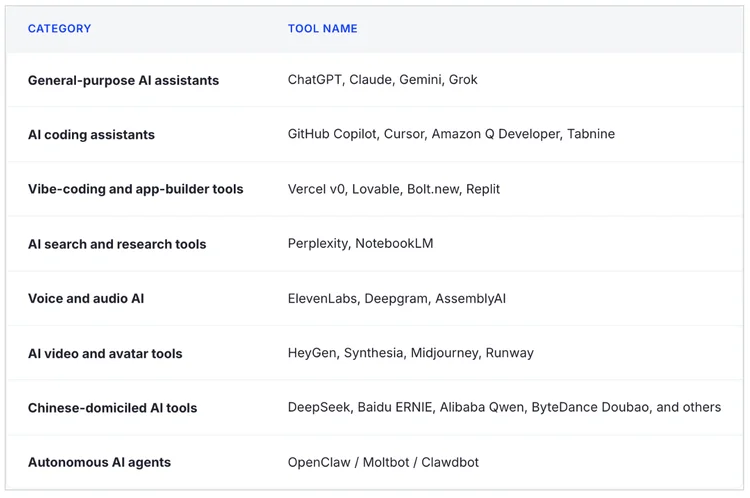
Recorded Future provides two specifically curated lists: the AI infrastructure list and a separate focus on Chinese AI infrastructure. Together, they encompass a wide variety of AI tools, including general-purpose assistants, coding aids, specialized AI applications, and autonomous agents. With global tensions around technology and security rising, understanding the origins of these AI tools is increasingly significant for security teams grappling with geopolitical risks.
The Implications for Security Teams
What this means for you, if you're entrenched in security operations, is profound. The tools and strategies you used yesterday may not suffice to combat the evolving threats brought about by AI. Traditional security frameworks often struggle to monitor and assess unauthorized AI applications. The growing prevalence of these technologies means that security teams must rethink their strategies, not just for the present but for the near future.
This new phase in cybersecurity requires a shift in perspective. Organizations must foster a culture where security is viewed as everyone's responsibility—not just the IT department's. The engagement of all employees will help in mitigating the risks of shadow AI. Training and awareness campaigns could foster a healthier relationship with technology adoption, urging employees to be proactive rather than reactive.
As AI tools continue to proliferate, proactive measures will be paramount. If security teams fail to act decisively, they risk financial loss, reputational damage, and possibly functional paralysis due to unforeseen vulnerabilities. Now is the time for organizations to align their security protocols with the rapidly changing technology landscape. With threats evolving, a reactive approach might soon become obsolete.


