Apple Prepares China-Specific Version of Apple Intelligence in iOS 27 Beta
iOS 27 beta reveals Apple is developing a version of Apple Intelligence for mainland China, focusing on enhanced user privacy and security.
Cybersecurity threats, protection strategies, and best practices
Found 115 articles
iOS 27 beta reveals Apple is developing a version of Apple Intelligence for mainland China, focusing on enhanced user privacy and security.
The recent Hugging Face incident reveals how AI transforms cyber attacks, enabling rapid, high-volume exploitation of vulnerabilities, urging new defensive strategies.
July 2026 saw a 44% increase in critical cybersecurity vulnerabilities, with 57 enabling remote code execution, highlighting the urgent need for proactive patch management.
TSMC is ramping up production capabilities for 3nm and 2nm wafers, aiming for significant output increases by year-end to satisfy strong customer demand.
Chery's $75 million investment in KG Mobility will result in a 10% stake and launch of the SE-10 SUV next year, boosting global partnerships.
Advancements in AI are reshaping threat intelligence, demanding faster responses and smarter defense strategies from organizations.
China plans to ban blue exterior lights that indicate assisted driving on newly certified passenger vehicles to maintain standardization of lighting colors.
China's renewable energy generation surpasses 40% of total power output for the first time, marking a significant shift in the energy sector.
Tencent brings back QQ Pet, now featuring 3D models and AI interactions powered by Hunyuan Hy3, enriching user engagement and gameplay.
Microsoft is assessing Moonshot AI's Kimi K3 to potentially optimize Copilot's operations and reduce costs significantly.
A cyberattack using an AI model has sparked a discussion on cybersecurity, highlighting the role of open-source AI tools in incident investigation.
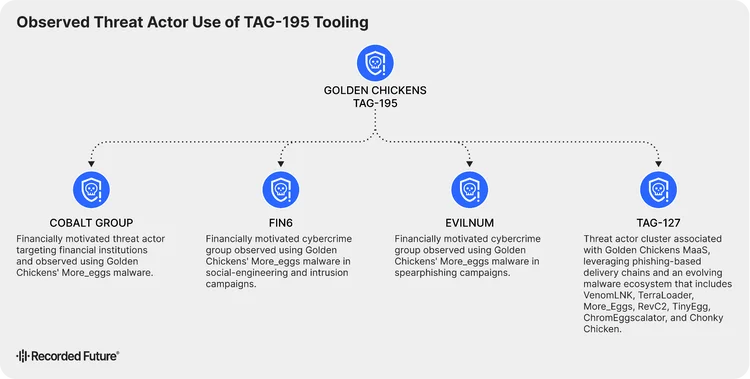
New findings reveal TAG-195's advanced modular malware families, enhancing operator flexibility and detection evasion tactics in the MaaS landscape.
Key insights on evolving attack vectors showcase the urgent need for proactive threat intelligence in today's cybersecurity landscape.
Proactive threat hunting empowers cybersecurity teams to detect hidden threats before they cause damage, leveraging human insight and external intelligence.
Organizations must adopt proactive intelligence strategies to combat advanced persistent threats and minimize the risk of successful cyber attacks.
Investigating how Iran enhances its asymmetrical warfare capabilities through AI, revealing significant threats to regional stability and infrastructure.
Google’s Tensor G6 is set to become the first 2nm smartphone chip, beating Apple’s iPhone 18 Pro to market by a month.
June 2026 saw a sharp rise in vulnerabilities, with 60 urgent flaws noted, 30 categorized as Very Critical, highlighting increasing cybersecurity risks.
Xiaomi introduces SkyNomad, its new SUV line aimed at families and adventure lovers, set to debut in late 2026 with an expanded product ecosystem.
As adversaries enhance their capabilities with AI, organizations must proactively develop defensive AI agents to maintain a competitive edge in cybersecurity.