Streamlining Healthcare Design: Enhancing User Experience and Engagement
In the world of healthcare websites, complexity often reigns supreme. These platforms tend to bombard users with a plethora of information: treatment options, service listings, procedural details, and more. While the goals may be noble—enhancing patient understanding and access to care—the end result frequently overwhelms visitors, leaving them adrift in a sea of dense content and competing calls to action.
Reframing the Design Approach
How can one design a healthcare website for individuals who prefer brevity, clarity, and simplicity? This question served as a guiding principle for the development of A Better Lou, a platform crafted with a focus on reducing cognitive load and enhancing user experience.
The case study of A Better Lou examines how design principles, structural content decisions, and the capabilities offered by Webflow were integral in creating an accessible healthcare experience tailored for its users.
New to Webflow? Explore Webflow University for beginner-friendly courses, tutorials, and practical guides to help you get started.
Fostering Trust Through Clarity
The visual language often employed by healthcare websites is notoriously familiar: calming blue tones, photographs of doctors in lab coats, and medical illustrations. These elements exist to evoke trust, but A Better Lou aimed for a broader experience—one that conveys credibility while centering on quality of life components like energy, confidence, and recovery.
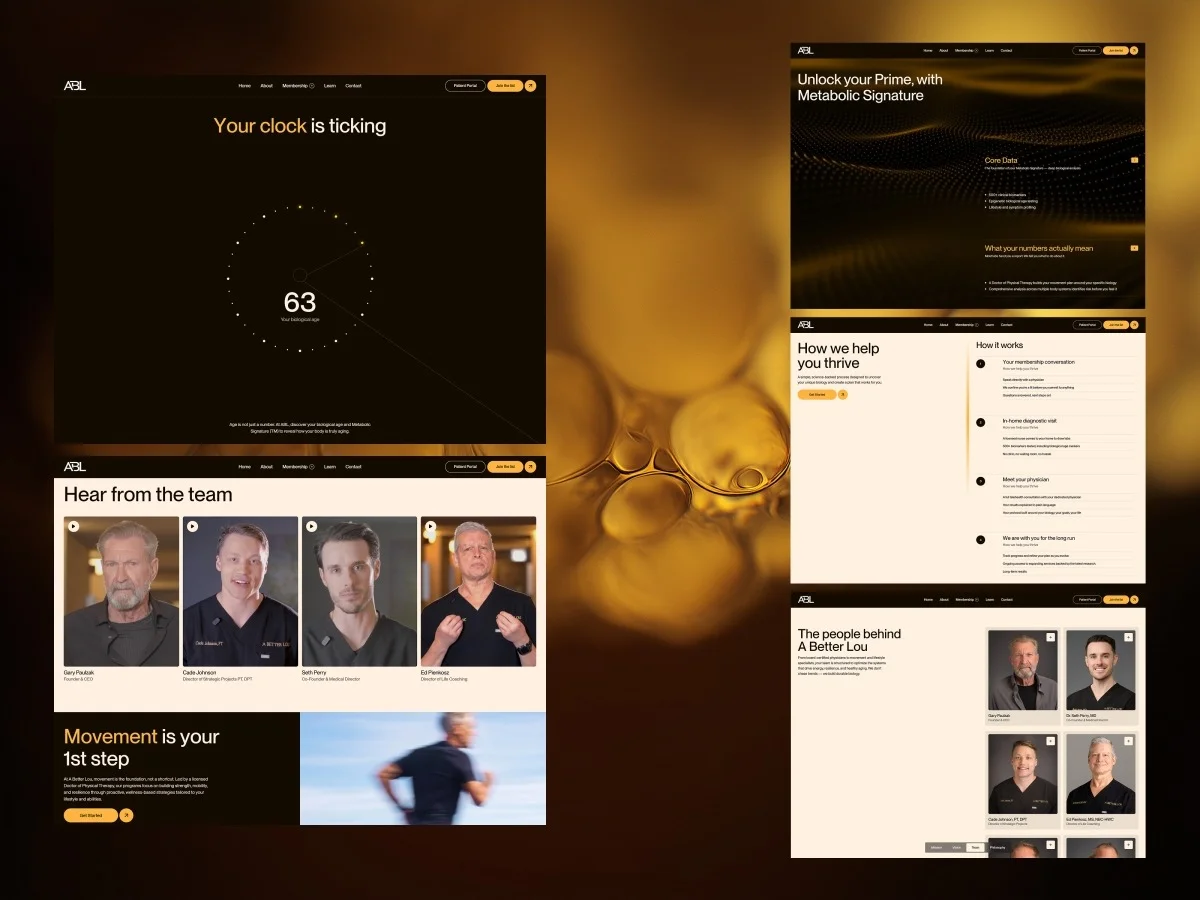
During the design phase, the focus shifted from traditional medical symbols to a stylistic approach prioritizing clean typography, ample whitespace, and relatable imagery. The outcome is a design that sits at the intersection of healthcare, lifestyle, and editorial aesthetics—professional yet personable.
Instead of signaling a medical institution, the design centers on user aspirations, guiding them towards solutions rather than dwelling on their current health struggles.
Outcome-Centric Design
A persistent challenge highlighted in healthcare web design is organization. Traditional websites tend to be structured around treatments and procedures, which might make sense for providers but can leave users confused. Users arrive looking for solutions rather than specific treatments; they seek remedies for low energy, unwanted weight gain, or the impacts of aging.
A Better Lou solved this with a focus on outcomes first, followed by the clinical details later. The website organically guides visitors toward relevant solutions, streamlining their engagement with healthcare information and making the experience intuitive.
Designing for Scalability
One often overlooked aspect of web design is future scalability. Creating a few visually appealing pages is one thing; ensuring the design can grow as new services and content are introduced presents a different challenge.
With A Better Lou, the intent was to avoid design elements that could limit expansion over time. Clear design principles formed the foundation, facilitating growth without compromising user experience. This foresight influenced both the design and technical aspects of the website, allowing it to maintain quality and clarity as it evolves.
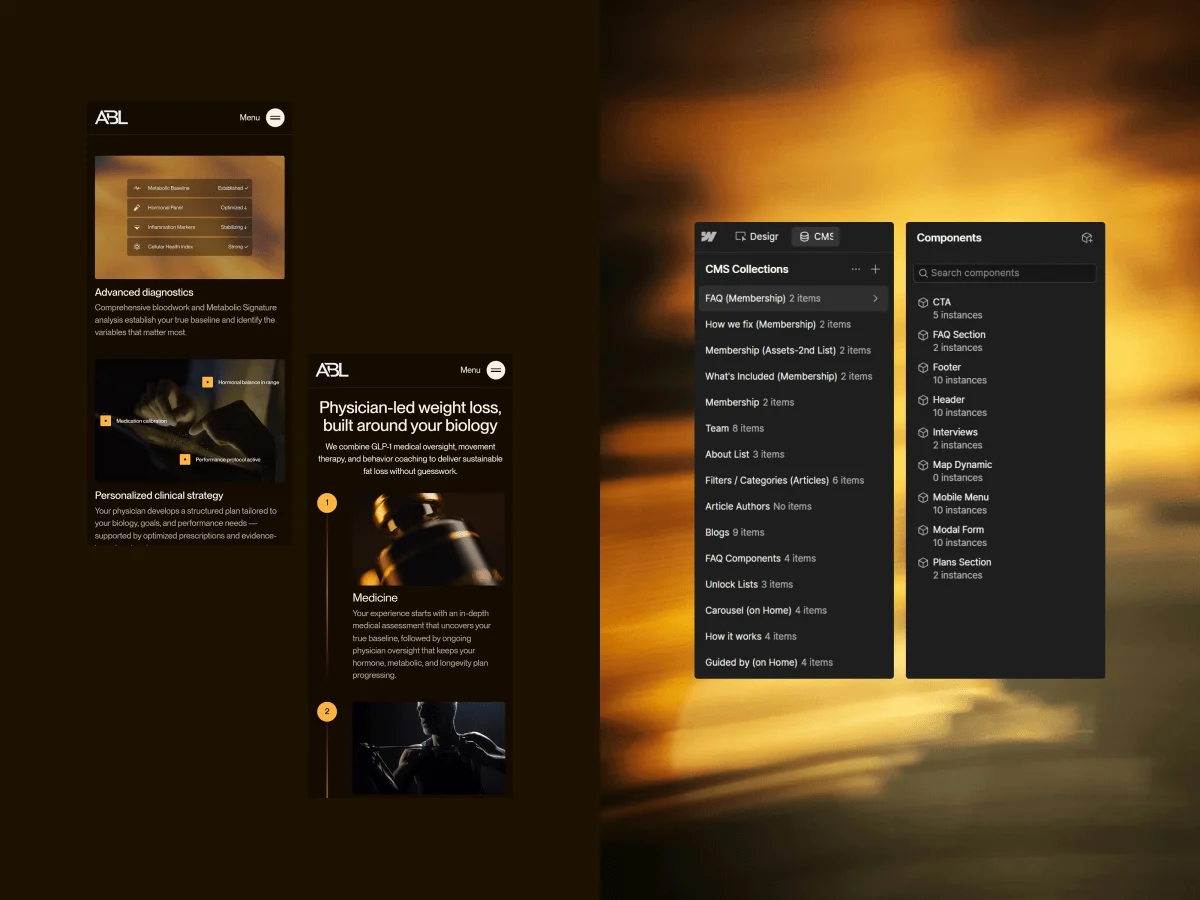
Experiences with Webflow reinforced the idea that scalability needs to be embedded from the start. When a site's content structure, relationships, and visual patterns are predefined early, adding new content becomes a seamless process, sparing teams from perennial redesigns or technical challenges down the line.
Redefining Men's Health Presentation
Many health platforms targeting men fall into the trap of employing aggressive visual themes: bold fonts, dark palettes, and an emphasis on extreme performance. However, A Better Lou took a different route by framing its messaging around quality of life rather than brute strength.
Conversations around the brand highlight enhancements in energy, recovery, and longevity—qualities that foster engagement with life rather than mere fitness regimens. This philosophy guided the visual design away from conventional masculine tropes towards a balanced, sophisticated approach that resonates with users seeking holistic well-being.
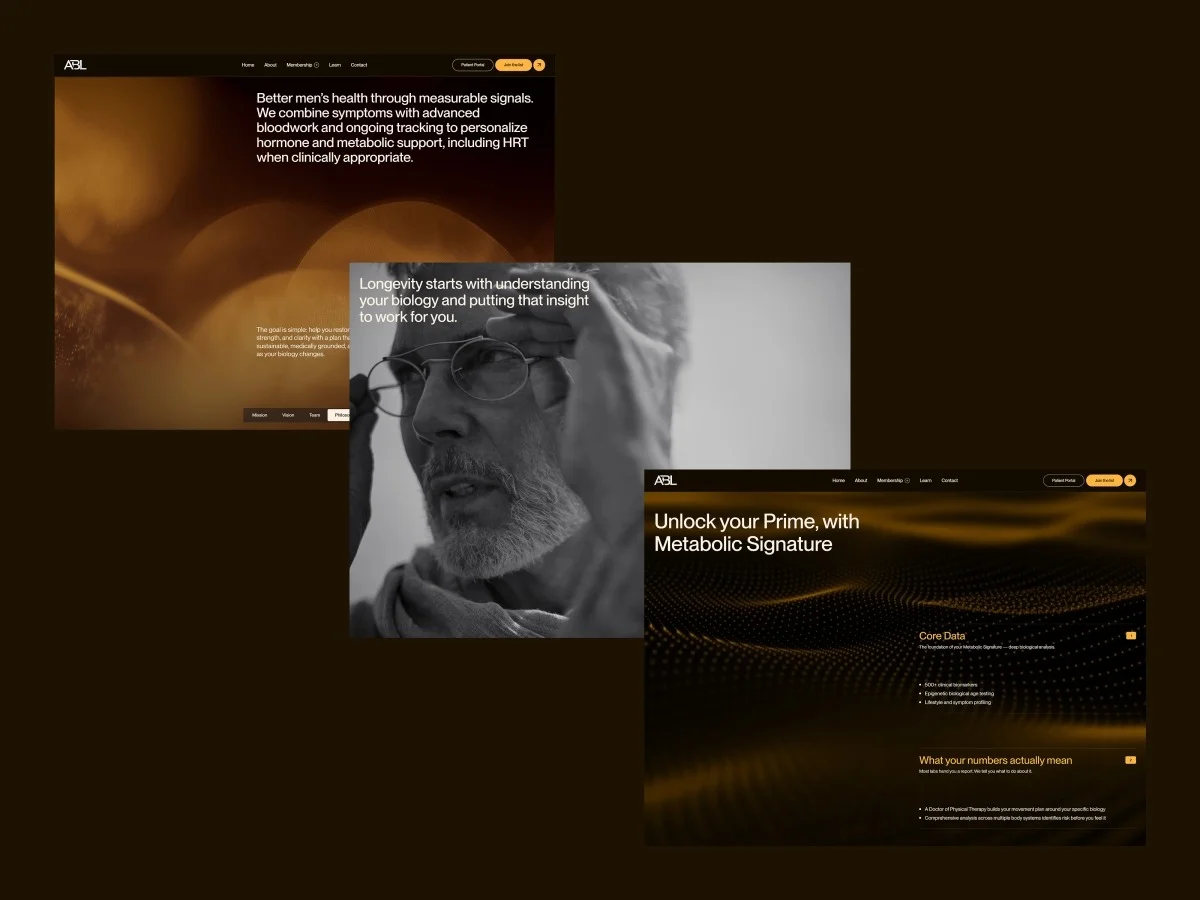
Typography was pivotal in establishing clarity and function. Large headers paired with ample spacing allowed important messages to shine through without overwhelming visitors. The imagery favored authentic representations over extreme transformations, reflecting real-life experiences rather than hyperbolic success stories. The blend of healthcare and editorial styles built a level of trust without resorting to familiar marketing clichés.
Enhancing User Experience in Webflow
The entire A Better Lou website was developed in Webflow, focusing on creating a robust foundational system. This approach includes leveraging existing frameworks or building from scratch, emphasizing uniformity in design elements like typography, buttons, links, and spacing, which facilitate smooth future developments.
A significant portion of the site’s dynamic content is administered through the Webflow CMS, which allows for straightforward content updates from CSV files. This capability enables efficient management of extensive content while simplifying updates for the client.
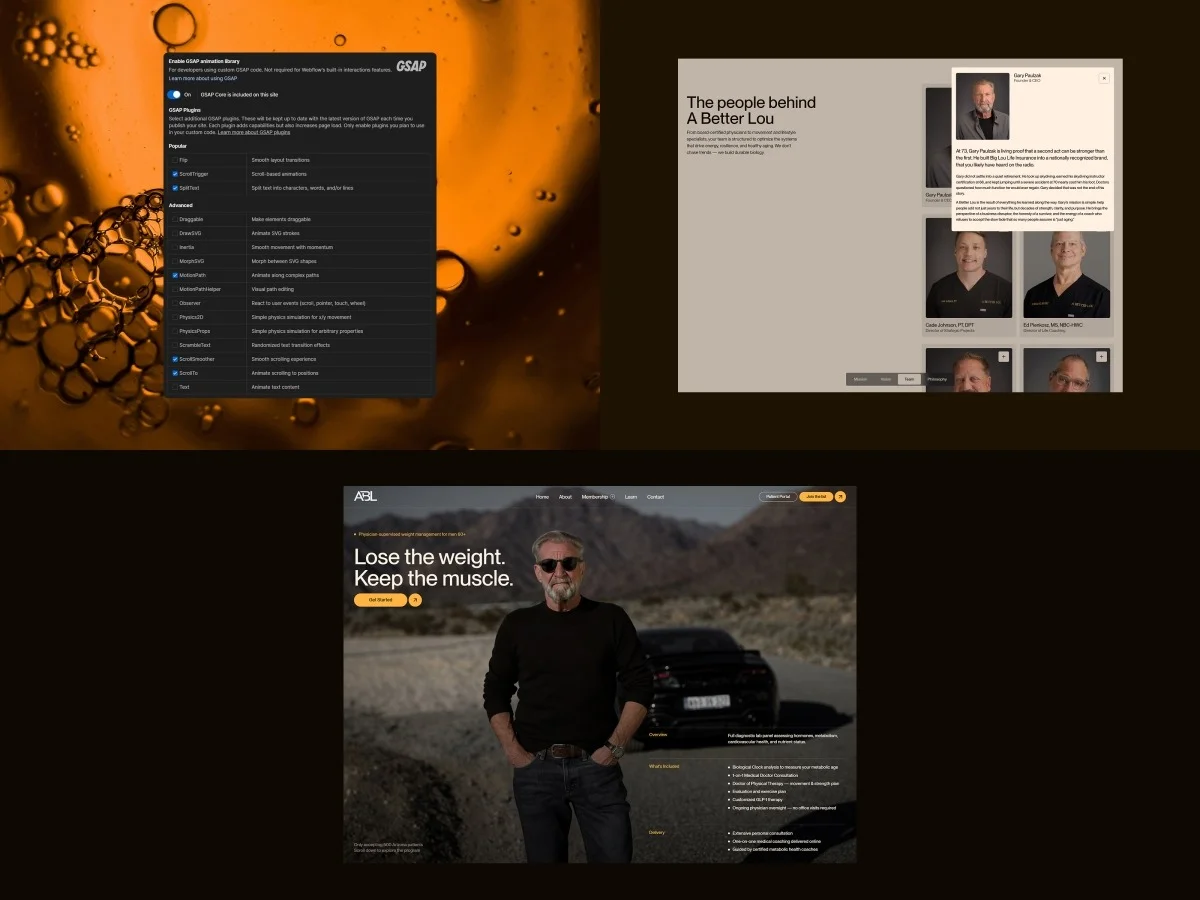
The website features custom video content powered by a bespoke Vimeo integration, minimizing complexity for clients. By utilizing Vimeo IDs and disabling navigation options, updates to video content become a straightforward process, allowing users to interact with a seamless visual experience.
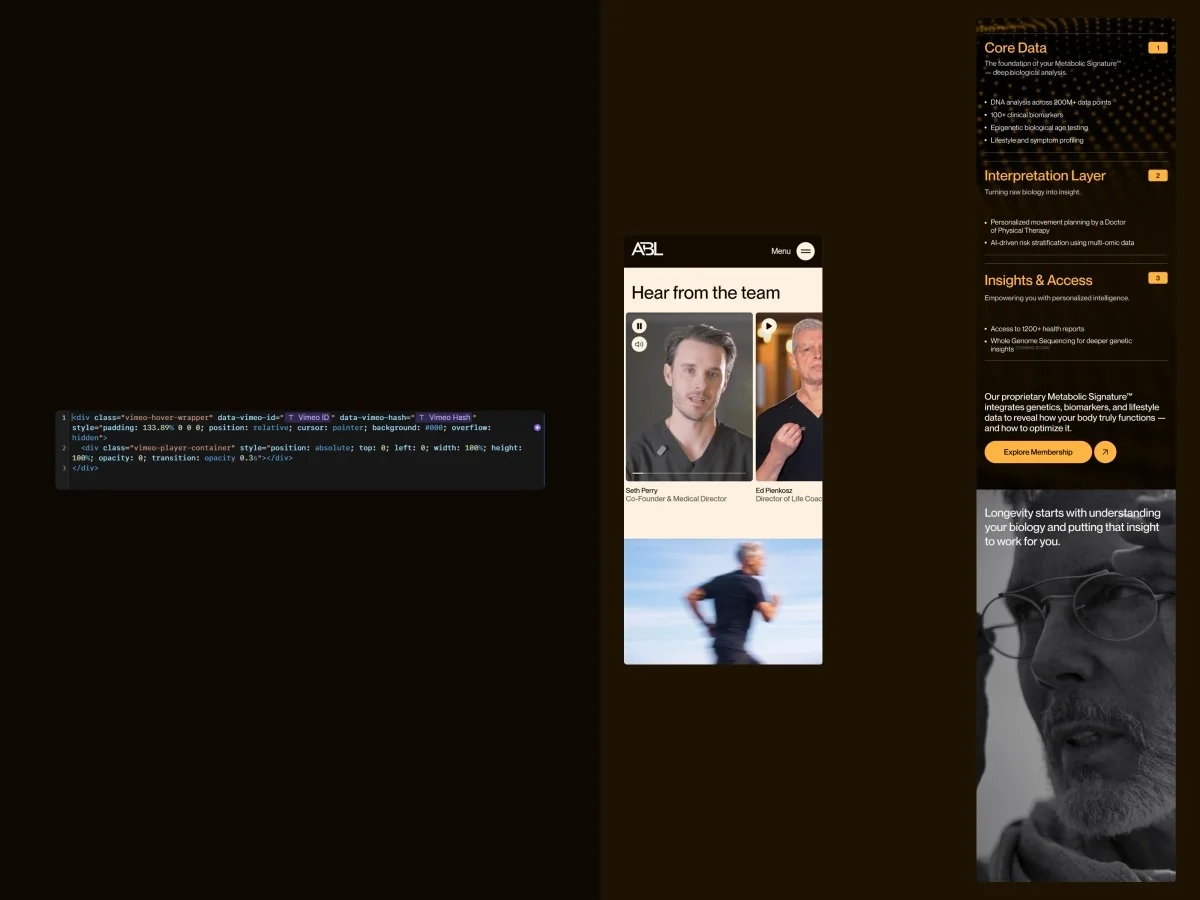
Hovering over videos triggers silent previews, enhancing the browsing experience while ensuring fast loading times and responsiveness.
Sustaining Functionality Over Time
One takeaway from the A Better Lou project is a common insight: while designing standalone pages is manageable, the difficult task lies in crafting systems that remain functional as content evolves. Everything from design to development and interaction management plays a vital role in sustaining this lifecycle.
Ultimately, the most successful websites maintain their effectiveness by facilitating growth without demanding extensive redesigns or overhauls. For A Better Lou, the mission was about harmonizing simplicity with a structure capable of supporting ongoing change.
If you found value in understanding this design process, consider connecting via social media to stay updated on impactful projects.
Instagram, Behance, LinkedIn