Scammers Exploit Permit Fees: A Deep Dive into the Latest Fraud Tactics
A new scam is targeting property owners, masquerading as municipal planning departments to extract payments for non-existent permit fees. As these criminals refine their tactics, the sophistication of their operations poses significant challenges for financial institutions and individuals alike.
FBI Alerts on Rising Threats
On March 9, 2026, the FBI's Internet Crime Complaint Center released a public alert regarding an uptick in scams involving fictional planning and zoning permit fees. This alert highlights the increasing number of nefarious actors who exploit the technological capabilities at their disposal to target unsuspecting property owners across the country. By accessing publicly available records, scammers identify property owners with active applications, then contact them via email to demand payment through wire transfers, peer-to-peer platforms, or even cryptocurrency, presenting these demands as urgent and legitimate.
According to the 2025 Internet Crime Report, government impersonation scams have surged, with reported losses nearing $798 million. This drastic increase highlights a systemic vulnerability within the payment processing landscape that financial institutions have yet to adequately address. As fraud becomes more sophisticated, it's clear that traditional defenses are losing effectiveness, and new strategies are urgently needed.
The Dangers of Authorized Payments
The key challenge in these fraud schemes lies in the way payments are authorized. The payment process often appears perfectly legitimate; victims are led to believe they are completing a standard transaction. With the victim authorizing the wire transfer and using what they believe are valid login credentials, traditional behavioral analysis models, which usually flag irregular account activity, fail to recognize the risk. This creates a significant opportunity for criminals, who exploit genuine customer interaction to complete transactions that are, in reality, unauthorized.
What's particularly concerning is that the critical fraud indicators reside not in the sender's actions but at the destination—specifically, the beneficiary accounts controlled by scammers, often referred to as money mule accounts. Identifying these accounts could be pivotal in distinguishing between legitimate and fraudulent transactions. Unfortunately, the challenge remains: without a clear framework for detecting these anomalies, both victims and financial institutions struggle to defend against this emerging threat.
Analyzing the Scam Process
The FBI alert and findings from CYBERA detail the modus operandi of these schemes as follows:
- Target Identification: Scammers sift through public records to pinpoint property owners involved in active planning or zoning projects.
- Impersonation: Initiating contact, they pose as officials from the relevant municipal planning department, referencing real permit and property information to increase credibility.
- Invoice Generation: Victims receive official-looking invoices, often mimicking real department communications, demanding payment for permit approval or processing fees.
- Pressure Tactics: Scammers create a sense of urgency by threatening that delays could jeopardize the application, pressuring victims to act quickly.
- Receipt Confirmation: To finalize the scam, they request confirmation of the wire transfer with a receipt, reinforcing the appearance of legitimacy.
This well-orchestrated process is designed to exploit cognitive biases, making it easier for victims to fall prey to the scam. (And this is the part most people overlook: the emotional and psychological pressure placed on victims often blinds them to the signs of fraud.) The protocol they follow fosters compliance – it’s a calculated scam leveraging authority and urgency against common sense.
Direct Engagement Uncovers Insights
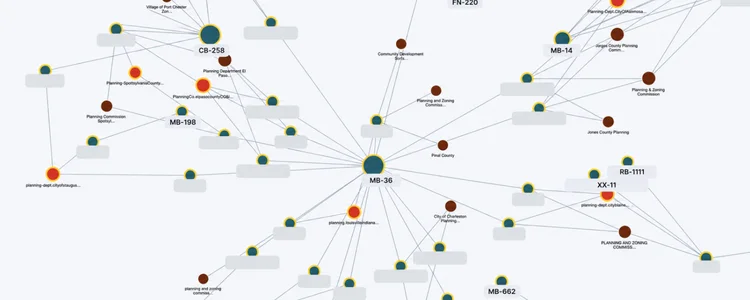
Research by CYBERA on these fraud operations has revealed that actively engaging with the criminals can yield invaluable intelligence. An investigation tracked a specific active ring, internally dubbed Diligent Planner, for several months, revealing 53 confirmed mule accounts linked to 23 different email campaigns. Nearly 55% of these accounts were concentrated within two beneficiary banks. This concentration points to early signs that banks may need to scrutinize their own processes and protocols more closely.
This direct approach contrasts with traditional risk assessment methods, as it relies on concrete data from the scammers themselves rather than probabilistic scoring. Engaging directly with these operations allows investigators and financial institutions to pinpoint actual accounts where victims' payments are directed. By honing in on these channels, they can enhance their response strategies, leading to more effective mitigation efforts. The implication here is clear: focused, data-driven responses could reshape how institutions tackle financial fraud.
Implications and Future Outlook
The surge in scams like these is indicative of a broader trend in fraud where technology is both a tool for criminals and a response mechanism for defenders. If you’re working in this space, the rise in technological sophistication among criminals poses an urgent challenge. Financial institutions may find that standard protections are insufficient. They're going to have to think creatively about how to authenticate transactions and differentiate legitimate requests from fraudulent ones.
This trend might also lead to regulatory changes, as agencies begin to recognize the need for stricter guidelines on transaction initiation and compliance checks. Institutions might increasingly rely on machine learning algorithms trained specifically to identify payment patterns that hint at fraud, which could ultimately shift the burden of detection from individual vigilance to automated systems. As this situation evolves, understanding these complexities will be critical for both consumers and businesses alike, forcing a broader reassessment of how we view and manage payment security.