Rethinking Cyber Defense: The Impact of AI and Threat Intelligence Fusion
Shifting Paradigms in Cyber Defense
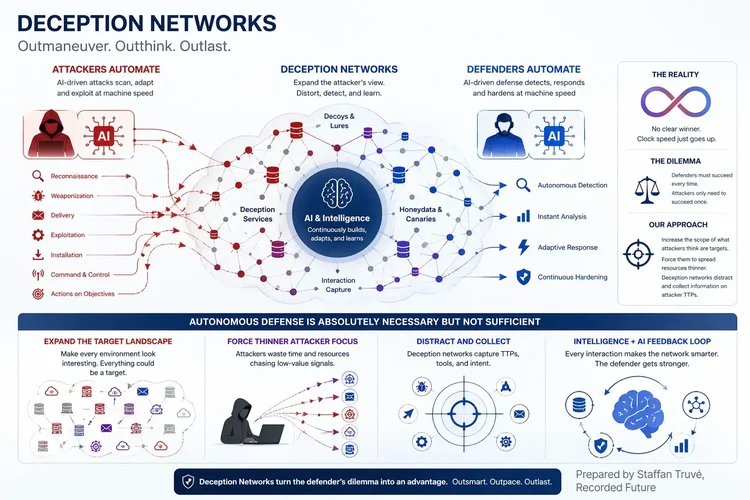
Cybersecurity has long been characterized by a significant disparity between attackers and defenders. The challenge lies in the defender's need to safeguard every potential vulnerability, while an attacker only needs to exploit one weakness to gain access. This balancing act raises questions about how to level the playing field, and the infusion of artificial intelligence (AI) with threat intelligence offers compelling solutions.
Beyond Automation: The Fusion of AI and Threat Intelligence
Most discussions around AI in cybersecurity focus on its capability to automate existing workflows, such as accelerating alert responses or patch management. While these are valuable improvements, they don't alter the fundamental operational dynamics defenders face. The remarkable advancement occurs when AI synergizes with threat intelligence, resulting in capabilities that enhance defensive strategies beyond mere automation.
Threat intelligence has traditionally provided segmented data on potential vulnerabilities and malware behaviors, but its utility often hinges on human expertise for effective integration with an organization's unique systems. This is where the convergence of AI and threat intelligence becomes transformative: it enables continuous assessment and real-time cross-referencing of external threats with internal vulnerabilities.
Transformative Capabilities Enabled by AI
Real-Time Risk Assessment
With AI's power, organizations can continuously map threat actor tactics, techniques, and procedures (TTPs) against their existing infrastructure. This capability allows for immediate evaluation of risk based on live conditions, allowing defenders to pivot quickly and address the most pressing threats effectively.
Continuous Fusion of Knowledge
For too long, organizations have kept offensive intelligence and exploitation data in silos. The integration enabled by AI takes this a step further, facilitating a continuous flow of knowledge between what adversaries might attempt and where a company's own vulnerabilities lie. This leads to a nuanced understanding of attack pathways that can inform strategic defense measures continuously.
Prioritized, Contextual Vulnerability Management
Previously, vulnerabilities were typically prioritized based on industry-standard severity scores. AI changes this by analyzing active attacks to determine which vulnerabilities are actively exploited in real time. This results in a prioritized approach that emphasizes practical risk rather than merely theoretical assessments, a welcome shift for overwhelmed security teams.
Contextual Insight at Scale
Rather than reacting to isolated security events, AI allows for holistic analysis of broad logs and configuration changes. By correlating these with known attacker behaviors, AI can highlight anomalies that signify real threats, subsequently refining the detection process to be more effective and relevant.
Dynamic Attack-Path Analysis
Rather than relying on periodic assessments and penetration tests, AI facilitates a living model of the security posture, continuously re-evaluating exposure to exploit paths while updating based on threat intelligence. This enhances situational awareness and agility, allowing for proactive adjustments.
Anticipatory Incident Response
In the thick of an active incident, AI can assist security teams by predicting an attacker's next moves based on established patterns. This capability not only allows teams to react more quickly but helps them assert a proactive stance in the face of emerging threats.
Leveraging Deception as a Strategic Tool
The convergence of AI and threat intelligence doesn't just bolster defensive measures; it invites implementation of offensive strategies through deception. By creating adaptive environments that mislead attackers, defenders can impose significant costs and complications on adversaries.
Adaptive Deception Technologies
Familiar deception methods like honeypots are often static, making them easy targets for seasoned attackers. However, AI empowers the creation of dynamic, realistic-looking traps that evolve based on attacker behavior. These sophisticated decoys can trick adversaries while gathering intelligence on their methods.
Intelligence-Driven Decoy Strategy
AI's continuous threat analysis can facilitate the strategic placement of deception mechanisms exactly where they are most likely to engage attackers. This tactical approach means that decoys are not generic; instead, they are intricately linked to known adversary behaviors, heightening their effectiveness.
Wider Access to Intelligence-Driven Strategies
AI's integration democratizes threat intelligence, making powerful defensive strategies accessible to a broader range of security team members. By simplifying information queries, even staff with less specialized skills can leverage intelligence robustly in their defensive strategies.
Strategic Implications of AI-Driven Defense
Ultimately, the ability to integrate threat intelligence efficiently alters the informational landscape for defenders. Rather than merely trying to protect every facet of their infrastructure, organizations can now concentrate resources on the aspects most likely to be targeted based on empirical data. This shift in focus diminishes the typical disadvantage faced by defenders.
The battle has transformed: it is now AI-enhanced insight against the unaugmented efforts of adversaries. Organizations adopting AI-powered threat intelligence not only stand a better chance in cybersecurity conflicts but also enhance their operational readiness through continual learning and adaptation. Those that lag behind risk falling further into disadvantage.
The Future's Unresolved Challenges
With the potential rise of fully autonomous attackers, the necessity for autonomous defense systems becomes apparent. As AI-driven adversaries evolve, defenders must match this sophistication with their own systems capable of independent threat assessment and response. The ethical and operational challenges that arise with such capabilities require immediate attention.
The introduction of AI also ushers in new adversarial strategies, as attackers may intentionally manipulate their profiles to evade detection. Quality threat intelligence becomes paramount, as any gaps can be exploited by those seeking to disrupt this evolving dynamic.
While the foundational challenges of cybersecurity persist, the integration of AI and threat intelligence reshapes the battlefield. By equipping defenders with the tools and insights needed to navigate this space effectively, the potential for achieving a more equitable fighting stance has never been greater. The ongoing commitment to develop these capabilities could signal a new era in cybersecurity where the balance of power shifts in favor of the defenders.