The Evolution of Robotics: How AgiBot is Redefining the Future of AI Integration
Transforming Humanoid Robotics
The competitive environment for humanoid robotics is undergoing a significant transformation, as demonstrated by AgiBot's recent advancements. In 2026, the emphasis is shifting from merely creating robots to developing sophisticated AI systems that harness the power of data and simulation. This shift is indicative of a broader trend, as industries across the board are beginning to understand the immense potential of AI in enhancing productivity and enabling smarter systems.
AgiBot’s Innovative Products
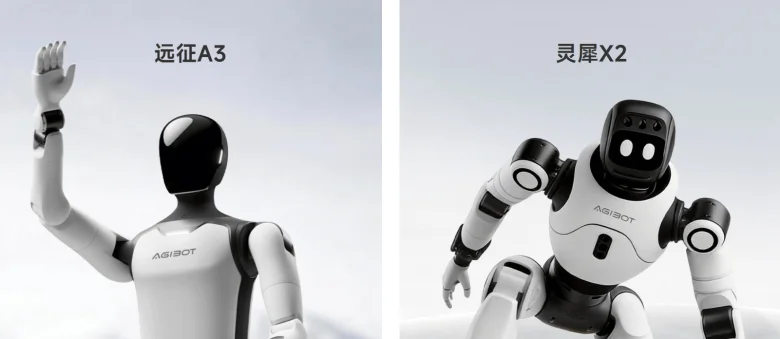
AgiBot’s latest innovations illustrate this paradigm shift. The company has launched the Expedition A3 and upgraded its foundational AI models, culminating in the introduction of GO-2, an embodied foundation model designed to enhance robots' ability to understand, plan, and execute complex tasks. This new model represents a clear step away from traditional programming methods. Instead of being confined to a preset number of tasks, robots like GO-2 can now perceive their surroundings and adapt to unpredictable changes. It’s more than just an upgrade; it’s a new approach to programming robots with a focus on flexibility and learning.
Simulated Environments and Data Collection
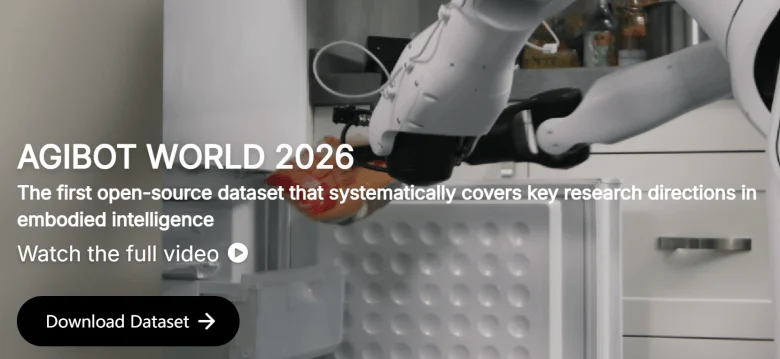
Moreover, projects like Genie Sim 3.0 generate essential training data through simulated environments, establishing a bridge between hardware and data analytics. This is significant because, with simulations, robotics developers can create vast amounts of training data without the costs and logistical complications associated with physical testing. Initiatives such as AGIBOT WORLD and the GE-2 Action World Model further integrate robotic systems with comprehensive data platforms, signaling a unified approach to technology development. This kind of integration allows researchers and engineers to iterate more quickly and develop insights that would take much longer through traditional testing methods.
Redefining Robotic Roles
This transition redefines a robot's role from being a mere mechanical device to an intelligent system capable of navigating complex environments. Traditional robotics focused on design, motion control, and supply chains, prioritizing agility and reliability. As those challenges become easier to tackle, the industry is pivoting towards more sophisticated questions: Can robots adapt to unprogrammed tasks? Can they share learning experiences in real-time? These aren’t just theoretical questions; they have profound implications for how human-robot collaboration might function in the near future. After all, if robots can learn in real-time, they could significantly enhance operational efficiency in various sectors such as manufacturing, logistics, and even healthcare.
The Role of Data in Embodied AI
The competition in embodied AI is increasingly about the ability to learn and adapt through data. AgiBot's AGIBOT WORLD has assembled an impressive repository of real-world data samples, while Genie Sim 3.0 has debunked the myth of limited simulation by providing over 10,000 hours of training data across 100,000 scenarios. This richness of data helps refine algorithms that drive decision-making processes in robots. If you're working in this space, you know that high-quality data is the lifeblood of effective machine learning. Therefore, companies must prioritize not just the quantity but also the quality of data they can gather and analyze.
The Hive Data Co-Creation Initiative
AgiBot’s Hive Data Co-Creation Initiative aims to scale data production to unprecedented levels, seeking tens of millions of hours of new data in 2026. This initiative highlights an essential shift: the confluence of real-world data collection and simulation training creates a continuous loop of learning and refinement for robotic models. Here’s the thing: this cyclical approach means that the advancements in AI won’t just come from superior hardware but also from a better understanding of the environments robots operate in. Continuous improvement in both data collection and algorithm refinement is key.
The Future of Competition
Leveraging simulation reduces the costs associated with real-world data gathering, enabling robots to virtualize their learning before implementation. This cyclical foundation sets the stage for future competition that will hinge not just on hardware capabilities but on the quality and volume of data, and the efficacy of the models created from it. AgiBot envisions not just a series of individual robotic products, but a cohesive system that unites hardware, data, models, and development tools into a singular framework. This perspective reflects a recognition that modern robotic solutions require more than just competent machinery; they also need sophisticated AI architectures that can process large datasets and adapt on-the-fly.

Reevaluating Hardware and AI Models
While it’s true that hardware development remains vital—the fundamentals of mechanical reliability, cost efficiency, and mass-production practices will be critical—the competition will increasingly involve a comprehensive evaluation of hardware alongside data-driven AI models and practical applications. Previous paradigms in robotics emphasized building resilient and efficient machines, but now it appears that the emphasis is shifting. More than the mechanics, it's about how well a robot's underlying software interprets data and learns from it.
The Evolving Role of Robots
Thus, observers in 2026 would do well to focus not solely on which company can produce the most advanced humanoid robot, but rather on which can construct an adaptive system through intelligent design. The pivotal question is evolving from “Can robots move?” to “Can robots learn?” (and this is the part most people overlook). This evolution might pose challenges, too. The more robots learn, the more responsible manufacturers will have to be about ethical considerations surrounding AI and autonomous decision-making.
Significance and Future Outlook
Through AgiBot’s strategic moves this year, it’s clear that the robotics industry is rapidly converging with the AI sector, with companies like AgiBot leading the way toward a future where robot intelligence will be defined by their ability to learn and adapt continuously. As this trend progresses, we may very well see a new generation of robots that don't just perform tasks but evolve into more intelligent partners in various fields. This evolution will inevitably disrupt traditional industries, and the implications could be far-reaching.