Revolutionizing Threat Intelligence: Recorded Future's AI Alert Filtering Enhances Analyst Efficiency
Recorded Future has stepped up its offerings with the introduction of AI Alert Filtering, an automatic feature designed to enhance efficiency in threat intelligence monitoring. This tool represents a significant evolution in the way cybersecurity teams operate, allowing them to zero in on what's truly critical. In an environment where the stakes are astronomically high, the ability to prioritize alerts can make the difference between thwarting an attack and falling victim to a security breach.
The Challenge of Alert Overload
As threat actors have become increasingly sophisticated, particularly by exploiting vulnerabilities through AI-driven tactics, the volume of security alerts has skyrocketed. Cybersecurity teams now face the daunting task of manually sifting through these alerts. The situation is becoming untenable. Analysts are overwhelmed. In this context, the introduction of AI Alert Filtering isn't just timely; it's almost essential. By filtering out irrelevant alerts before they reach analysts, Recorded Future is shifting the paradigm, turning what used to be a reactive process into a more proactive one.
Early adopters have reported a remarkable reduction in alert volume—around 63%—although, as with any technology, results will vary based on specific circumstances and configurations. This significant reduction allows analysts to focus more on high-priority threats, rather than getting bogged down in the noise of low-relevance alerts. (And this is the part most people overlook.) Not every organization will see the same results; factors like existing infrastructure and alert management policies can lead to very different outcomes.
Streamlined Intelligence Management
The mechanics behind AI Alert Filtering rely on Recorded Future's proprietary AI technology designed to sort threat alerts effectively. Using the Intelligence Graph®, the system doesn't just look at raw text; it uses contextual analysis to gauge the relevance of alerts. This two-tiered approach allows for a smarter prioritization process. Alerts are categorized not just by urgency but by actual importance, which means analysts can look at alerts that matter first.
This process is a significant departure from traditional alert systems, and it embodies a growing trend in cybersecurity toward using AI not just as a tool for defense but as an essential component of threat analysis. It raises a critical question: aren't we leaning too much on automation? While it’s efficient, it’s crucial to ensure that human oversight remains in play. Algorithms can miss nuances that a human might catch, so there’s a balancing act here that organizations must navigate.
Key Features of AI Alert Filtering
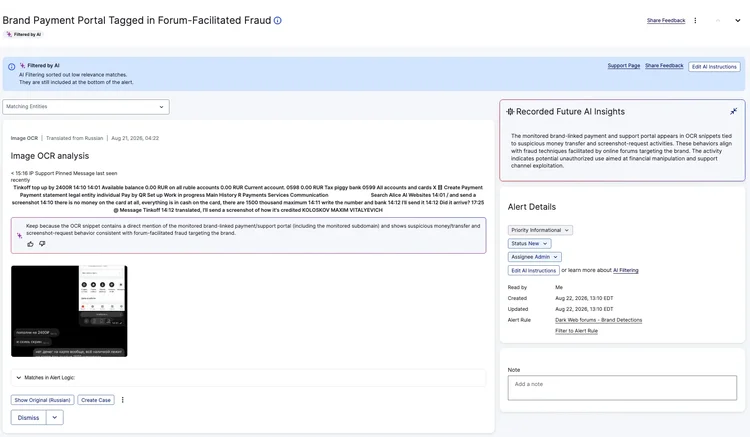
- High and Low Relevance Sorting: Each alert is divided into sections based on its relevance, ensuring that critical alerts are prioritized. This sorting system is particularly beneficial in a high-stakes environment where time is of the essence, as it minimizes the risk of missing important threats in a sea of less critical information.
- AI Summaries: Accompanying every alert is an AI-generated summary, which provides a quick snapshot for analysts. This prevents the need for examining each alert in exhaustive detail, allowing teams to triage more effectively and allocate resources where they’re needed most.
- Custom Intent Configuration: Analysts can customize the system to meet the specific needs of their organization. For instance, there might be a need to differentiate alerts impacting ACME Bank versus those affecting ACME Center. This flexibility eliminates the need for a complete overhaul of existing alert rules, enabling organizations to adapt swiftly without a significant ramp-up time.
- Auto-dismissal of Non-Relevant Alerts: Alerts that yield no relevant findings can be automatically dismissed. This feature can significantly enhance workflow by eliminating distractions while maintaining a record of the original alerts for auditing or future reference.
- No Data Loss Assurance: While the visibility of alerts can be adjusted, the assurance that all original data remains intact is key. Cybersecurity is all about retaining and analyzing data, so this feature guarantees that critical information isn’t lost in the filtering process.
Future Outlook and Implications
The introduction of AI Alert Filtering is more than just a new tool; it represents a shift in how companies view threat intelligence. As the cyber threat landscape becomes progressively complex, the need for efficient and effective alert management systems will only grow. Cybersecurity officials and company leaders will soon find that relying solely on human analysis can lead to missed threats or significant data breaches.
What this means for you, if you're working in this space, is that embracing AI-driven solutions could soon be a necessity rather than a luxury. As organizations increasingly invest in technology that reduces clutter and increases focus on high-priority alerts, those without such systems may quickly find themselves at a disadvantage. You might even see a competitive edge for those organizations that can streamline their cybersecurity operations efficiently—after all, prevention is cheaper than a cure.
That said, relying on AI introduces its own risks. The potential for false positives and the ethical considerations surrounding data management can't be ignored. A human touch is essential, ensuring that automated systems do not lead down a path where critical information is overlooked simply because the algorithm deemed it irrelevant. The challenge will be to strike a balance between efficiency and thoroughness, ensuring that alerts remain both actionable and relevant.
In essence, Recorded Future's AI Alert Filtering has potential, but that’s only the beginning. The next step will be determining how these systems can be integrated with existing workflows without sacrificing the human element that is so vital to effective cybersecurity.